Handheld Dynamometer
Kinvent K-Push
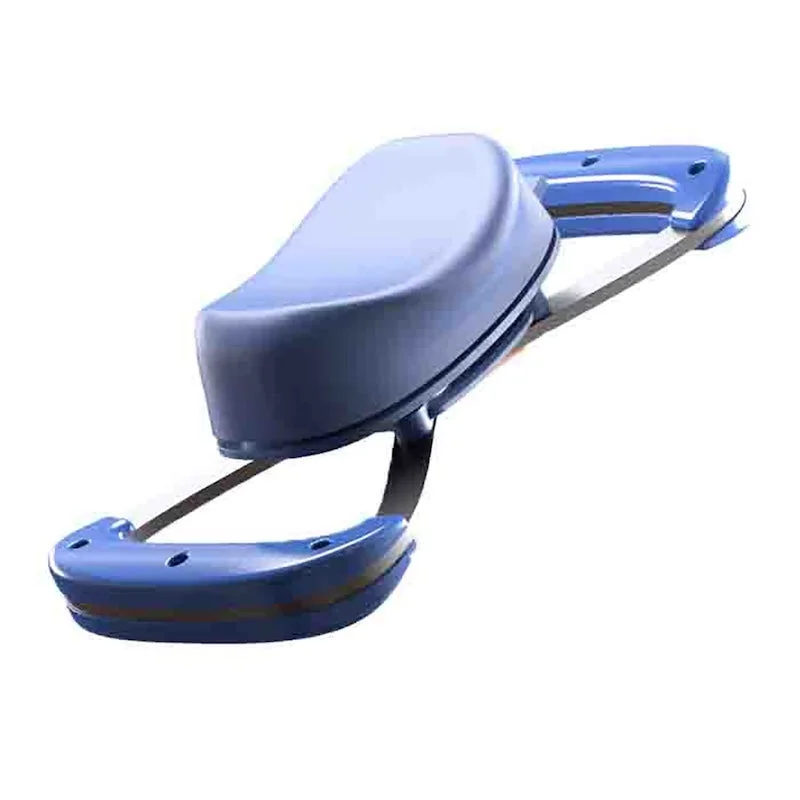
K-Push reads isometric muscle strength through compression. The tester holds the sensor against the limb, the person pushes into the contact pad, and two flat 50 kg load cells convert that push into a force figure. The published measurement range runs to 90 kg with a stated accuracy of 0.1 kg.
Force appears on the K-Force app as a live curve while the test runs, so peak force and average force over the hold are both on screen before the limb comes down. Swappable heads attach magnetically to the pad, and the accessory range covers close to 40 muscle groups across the upper and lower body.
Range90 kgPublished capacityAccuracy0.1 kgAs published by KinventLoad cells2 × 50 kgFlat cells behind the padWeight3.54 lbs10.83 x 5.19 x 6.69 inPeak and average isometric forceClose to 40 muscle groupsMagnetic swappable headsBluetooth to the K-Force app
Inside The Sensor
Two Load Cells Behind One Contact Pad
Compression is the whole mechanism here. Everything K-Push reports comes from what the pad feels while a limb presses into it.
⚖Dual flat load cellsTwo flat 50 kg cells sit behind the contact surface. Kinvent publish a 90 kg range for the assembled sensor and a 0.1 kg accuracy figure.90 kg / 0.1 kg?Magnetic accessory mountHeads swap on the magnetic mount between tests, which is how one body covers shoulder, hip, knee and ankle positions in a single session.Close to 40 muscle groups?Wireless readoutBluetooth carries the signal to a phone or tablet running the K-Force app. The tester watches the curve build during the effort and reads the number after it.Live force curve?Bench comparisonKinvent state that the sensor was checked against an Electroforce testing system. That comparison is what sits behind the published figures above.Electroforce reference
What You Get From It
Numbers A Clinic Can Work From
Written for physiotherapists, sports medicine teams and strength staff who already know the test protocols and want the figure the protocol asks for.
?Peak force per effortMaximum⏱Average force across a timed holdEndurance⇆Side-to-side difference as a percentageSymmetry?One sensor across upper and lower bodyCoverage?Readings on screen during the effortReal time?Fits in a bag for off-site testing3.54 lbs?Profiles hold results test to testRecords?Shares the app with every other Kinvent sensorK-Force
Closer Look
How The Test Actually Runs
The Push
Force Read Through Compression
The tester braces the sensor against the segment being tested and the person drives into it. Because the reading comes from compression at the pad, position and lever length are set by the tester, and the protocol you already use decides both.
- Two flat 50 kg load cells sit behind the pad
- Range published to 90 kg, accuracy published at 0.1 kg
- Heads change on a magnetic mount between positions
- Accessory range reaches close to 40 muscle groups
- Sensor body weighs 3.54 lbs
Isometric90 kg range0.1 kgIn The App
Peak, Average And The Gap Between Sides
Each effort produces a curve. The top of that curve is the peak, the flat part of a timed hold gives the average, and running the same position on both limbs gives a percentage difference between them. Results attach to a profile so the next session starts from the last one.
- Peak force from the maximum of the curve
- Average force across a hold you set the length of
- Percentage difference between left and right
- Bluetooth link to a phone or tablet
- Same app as every other Kinvent sensor
Live curveBluetoothK-Force app
The Range
Pressed, Squeezed, Pulled Or Inflated
Every one of these pairs with the K-Force app. What separates them is how force reaches the sensor.
You’re HereK-PushHandheld dynamometer for isometric muscle strength.Isometric strengthHandheldK-Force appCurrently viewingK-GripGrip dynamometer for grip strength and fatigue.Grip strengthPeak forceK-Force appShop the K-GripK-BubblePneumatic sensor for pressure and muscle activation.PressureActivationK-Force appShop the K-BubbleK-PullTraction dynamometer for tensile force.Tensile forceTractionK-Force appShop the K-Pull
Questions
Frequently Asked Questions
Isometric muscle strength, read as force applied into the contact pad. The app reports peak force from the highest point of the effort and average force across a hold whose length you set.Kinvent publish a range of 90 kg with an accuracy figure of 0.1 kg. The sensing element is two flat 50 kg load cells sitting behind the contact surface.Kinvent publish both figures side by side: two flat 50 kg cells, and a working range stated as 90 kg for the finished sensor. We quote them as published and have not seen a Kinvent statement explaining the difference between the cell rating and the assembly rating.Kinvent give a figure of close to 40 muscle groups when the full accessory range is in use. The number that matters more day to day is how many of your own protocols the head shapes cover, and the mount swaps them in a second or two.Over Bluetooth, to the K-Force app on a phone or tablet. The force trace draws while the effort is happening, so the tester can see whether the person reached a plateau or a spike.Yes. Run the same position on both sides and the app expresses the difference between them as a percentage. It is a measurement of the two efforts recorded, and interpreting it is the clinician’s call.The published dimensions are 10.83 x 5.19 x 6.69 in and the weight is 3.54 lbs. That figure covers the sensor as listed; accessories add to what you carry.Kinvent state that it was validated against an Electroforce testing system. We publish that as their statement and do not attach any further accuracy claim of our own to it.Yes. Set a hold duration and the app records the average force sustained across it alongside the peak. Comparing the two describes how much of a person’s maximum they held onto over the effort.Physiotherapists, rehabilitation clinics, sports medicine teams, strength and conditioning staff and researchers. It is a measurement instrument, and the testing protocol comes from the professional using it.It does. Kinvent run one app across the whole sensor family, so a K-Push result sits in the same profile as anything captured on K-Pull, K-Grip, K-Bubble or the force plates.Direction of loading. K-Push reads force pressed into a pad the tester holds, which means the tester’s own capacity is part of the setup. K-Pull reads force in tension along an anchored line, which takes the tester out of the load path.